Written by Logan Steemson (Year 10)
Royal Signals Museum Young Curator Programme (Work Experience)
Long Range Desert Group
Founder: Ralph Alger Bagnold
Active: July 1940 – August 1945
Country: United Kingdom
Role: Reconnaissance, Intelligence Gathering, Raiding Operations

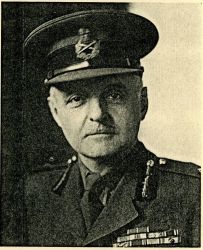
Figure 1: Ralph A. Bagnold
Origins and Formation
Major Ralph Bagnold, a British Army officer and desert explorer, gained deep knowledge of Saharan conditions through expeditions in the 1930s. His innovations in navigation and understanding of sand dynamics became pivotal during the Second World War.1
After the outbreak of war in North Africa, Bagnold proposed creating a specialised unit to operate far behind enemy lines. With approval from General Archibald Wavell, he formed the No. 1 Long Range Patrol Unit on 3 July 1940. This group would eventually become the LRDG, made up initially of carefully selected volunteers, including a significant number from New Zealand.2
Structure and Capabilities
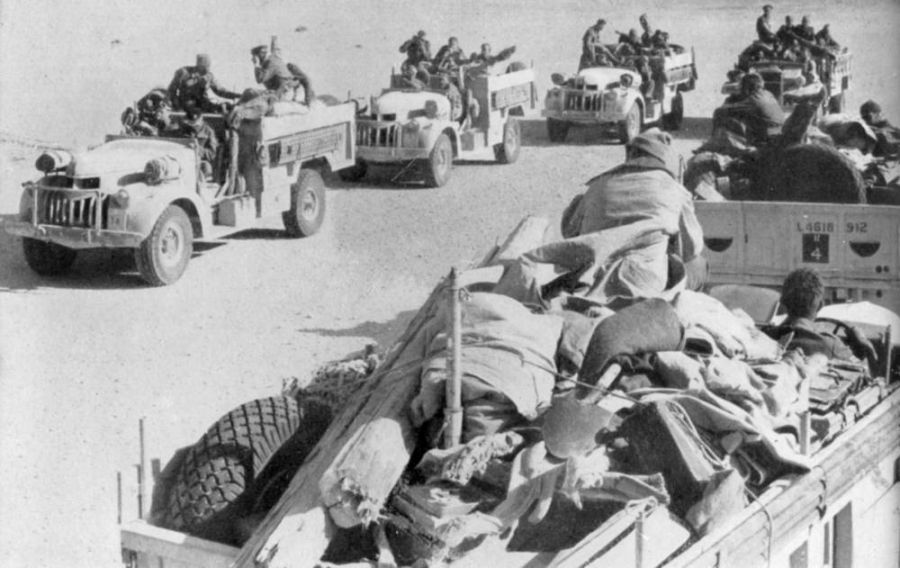
Each LRDG patrol typically consisted of 40 to 50 men and 10 vehicles, often organised into sections by nationality (New Zealand, British, Rhodesian, etc.). The unit specialized in long-range desert travel, with missions often exceeding 1,000 miles one way.3
They used heavily modified vehicles - most notably the Chevrolet WB 30 CWT trucks - outfitted with .303 Vickers K guns, .50 calibre Browning machine guns, Boys anti-tank rifles, and wireless equipment such as xxxxx. These trucks were stripped of unnecessary weight and adapted for endurance.
Later History and Disbandment
After North Africa, the LRDG operated in the Dodecanese and the Balkans, supporting partisan groups and conducting reconnaissance. However, with the war's shift in focus and new technologies emerging, their strategic value declined. The group was formally disbanded in August 1945 The LRDG remains a significant influence on modern special forces.

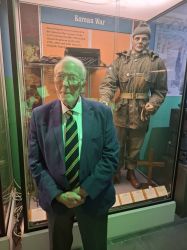
Figure 2: Kenneth Smith
Signalman Kenneth Smith GC
In early 1945, Signalman Kenneth Smith’s unit was stationed on the island of Ist in the Adriatic Sea, gathering intelligence on Axis naval activity. On 10 January 1945, their temporary footprint was infiltrated by saboteurs who planted time bombs.
Awoken by the disturbance and realising the threat to his comrades and nearby civilians, Smith acted without hesitation. One bomb had been placed in the wireless station; recognising the danger to those around him, he picked it up and attempted to move it to a safe location. Tragically, it exploded before he could reach cover, killing him instantly.
Smith’s self-sacrifice undoubtedly saved multiple lives. For his extraordinary courage and disregard for personal safety, he was posthumously awarded the George Cross - the highest award for non-combat gallantry in the UK. His medal is now preserved at the Royal Signals Museum, a lasting tribute to one soldier’s bravery in a moment where no training could dictate what to do.
Footnotes
- Bagnold, R. A. The Physics of Blown Sand and Desert Dunes, Methuen, 1941.
- Warner, Philip. The Long Range Desert Group 1940–1945. London: William Kimber, 1971.
- Moreman, Timothy R. Long Range Desert Group 1940–45, Osprey Publishing, 2003.