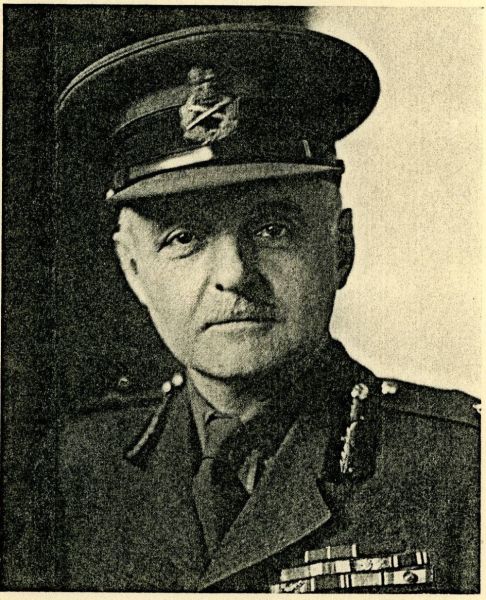
Over the last few months, the Museum has been adding a range of document collections to the Archive. Retired Major Phil McGiveron has been undertaking much of this work and has uncovered some fascinating personal stories. This piece focusses on General Sir Henry Colville Wemyss KCB KBE DSO MC.
Henry Wemyss was commissioned into the Royal Engineers in December 1910 having won the Sword of Honour during his time at the Royal Military Academy, Woolwich. The First World War was approaching and as with so many young men, he found himself heading to France in the British Expeditionary Force. He was soon promoted to Lieutenant and was Mentioned in Dispatches: in 1915 he was wounded in action, winning the DSO. The citation included the statement ‘for delivering messages under fire with promptness and despatch.’
After fighting in France, Wemyss was posted to Gallipoli in 1917 as well as the Balkans and Middle East. During this period he was Mentioned in Dispatches another three times. At the end of the war, having been made Major, he became an Instructor at The School of Signals in Catterick - having transferred from the Royal Engineers on the creation of The Royal Signals in 1920. By 1939 he had reached the rank of Major General.
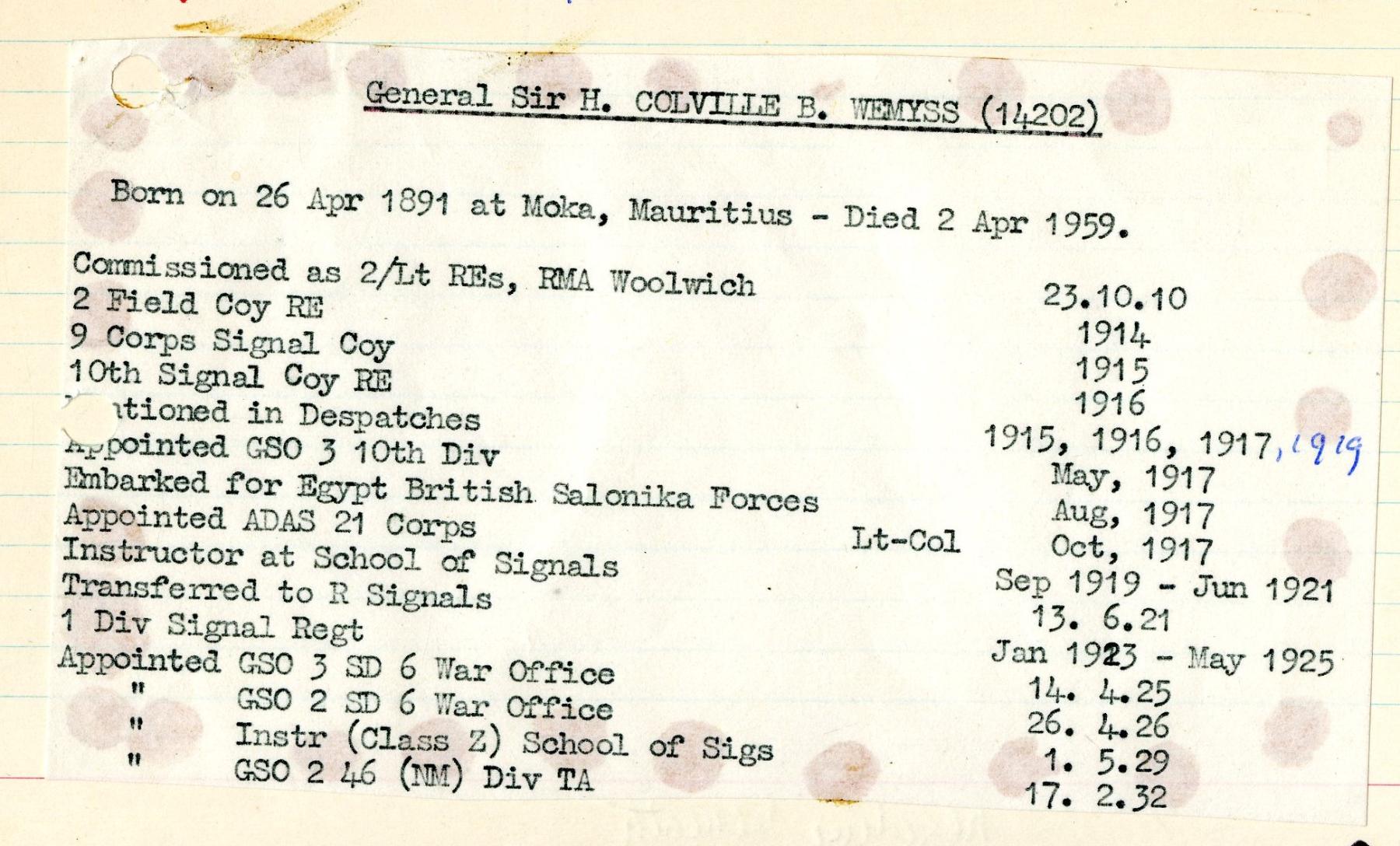
Wemyss’s career is captured on two cards in the records shown below. It is little known that around 1922 there was a proposal for the Royal Signals to be re-absorbed back into The Royal Engineers which Wemyss fought against and won, arguably helping to secure the existence of the Corps today.
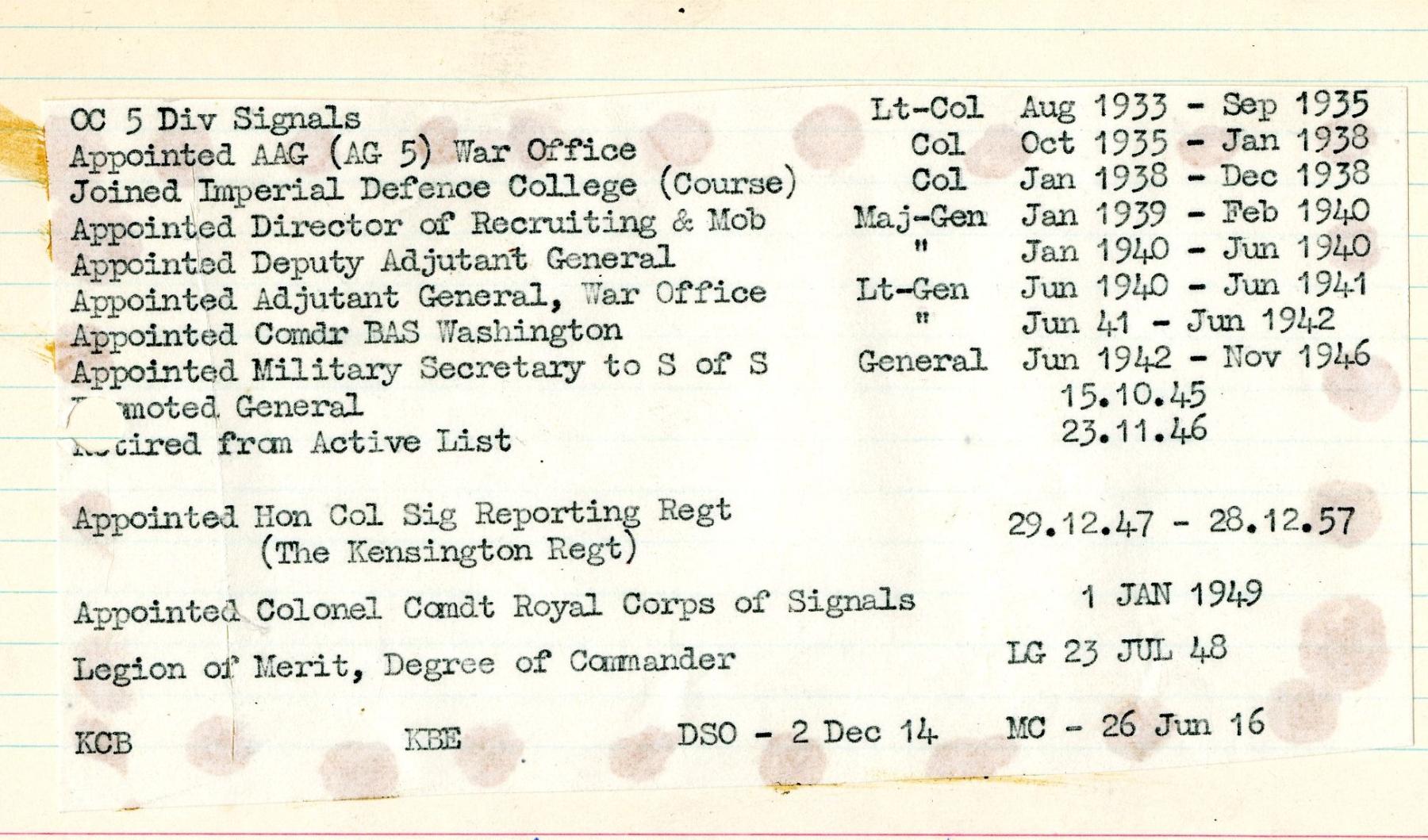
Having served in the War Office in the late 1920s he was recalled there in 1939 and became Director of Mobilisation, responsible for the mobilisation of the Army and the introduction of compulsory service. The Military Training Act, which he was involved in, imposed a liability for conscription for all men aged 18 to 41 years and this began in earnest during the ‘phoney war’ of 1939-1940.
USA
On 3 June 1941, Wemyss was appointed the Head of the British Army Mission to Washington. His role was to provide high level liaison between Britain’s War Office and the US War Department. He created a largely unknown group today called “The 41-42 Group” which was a voluntary group of ten senior British personnel who delivered talks to the American public. He also liaised with the American government and forces to help them understand the British and develop support for the war effort.
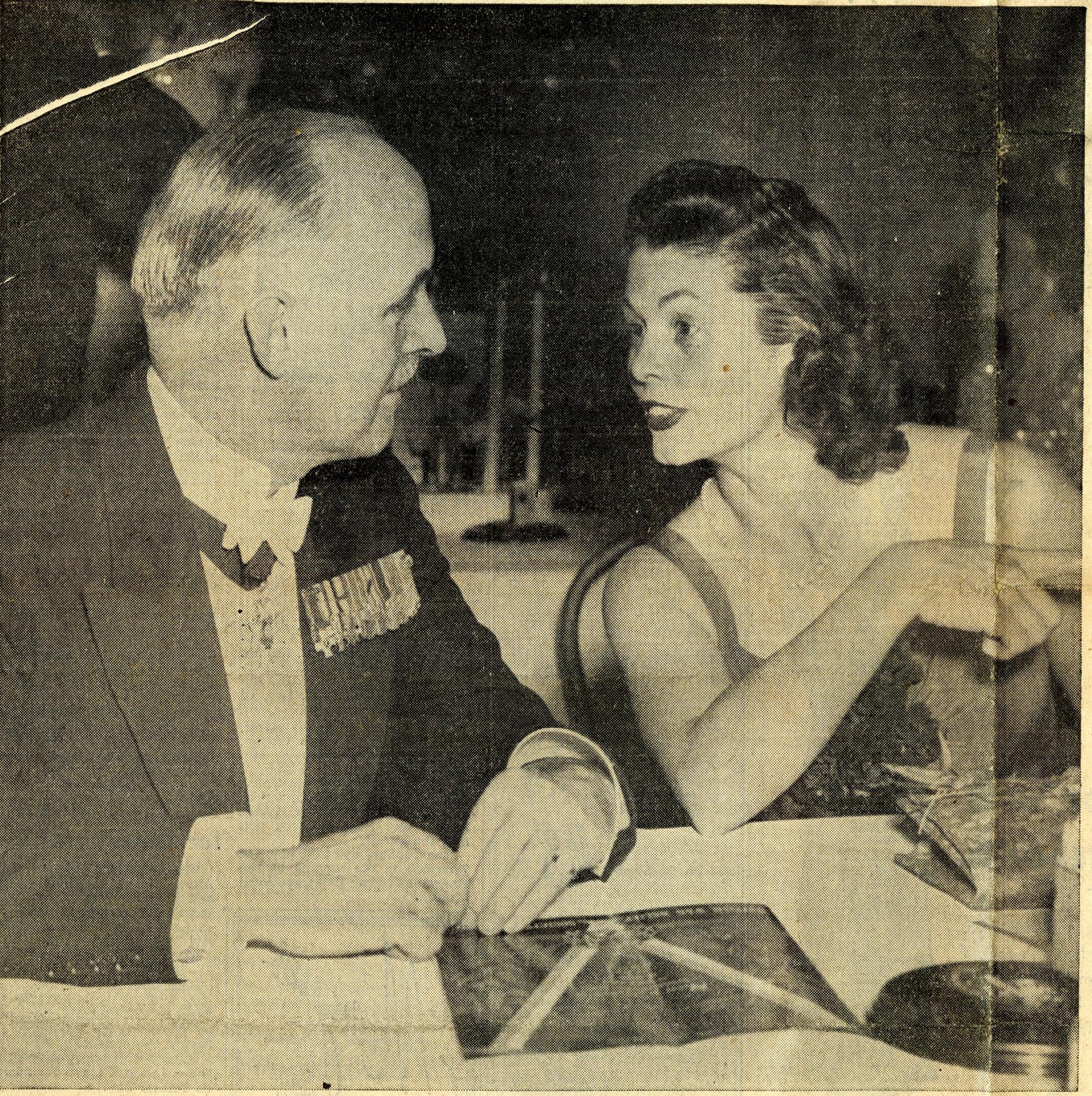
It was not all hard work and no play - Wemyss was also highly visible on the party circuits, seen in the photo below in October 1941 at a charity event next to Mrs Alger (a highly influential family from Michigan whose husband became USA secretary of State) to raise funds and support for the British war effort.
In January 1942, Prime Minister Winston Churchill decided to replace Wemyss in Washington with General Sir John Dill as Wemyss was needed in Britain at the height of the war and was appointed Military Secretary to the Secretary of State for War on 16 June 1942. Lord Halifax, British Ambassador to USA having been sent there by Churchill wrote, ‘we are all very sad that you are not coming back.’ He was to remain in this key post for the rest of the war.
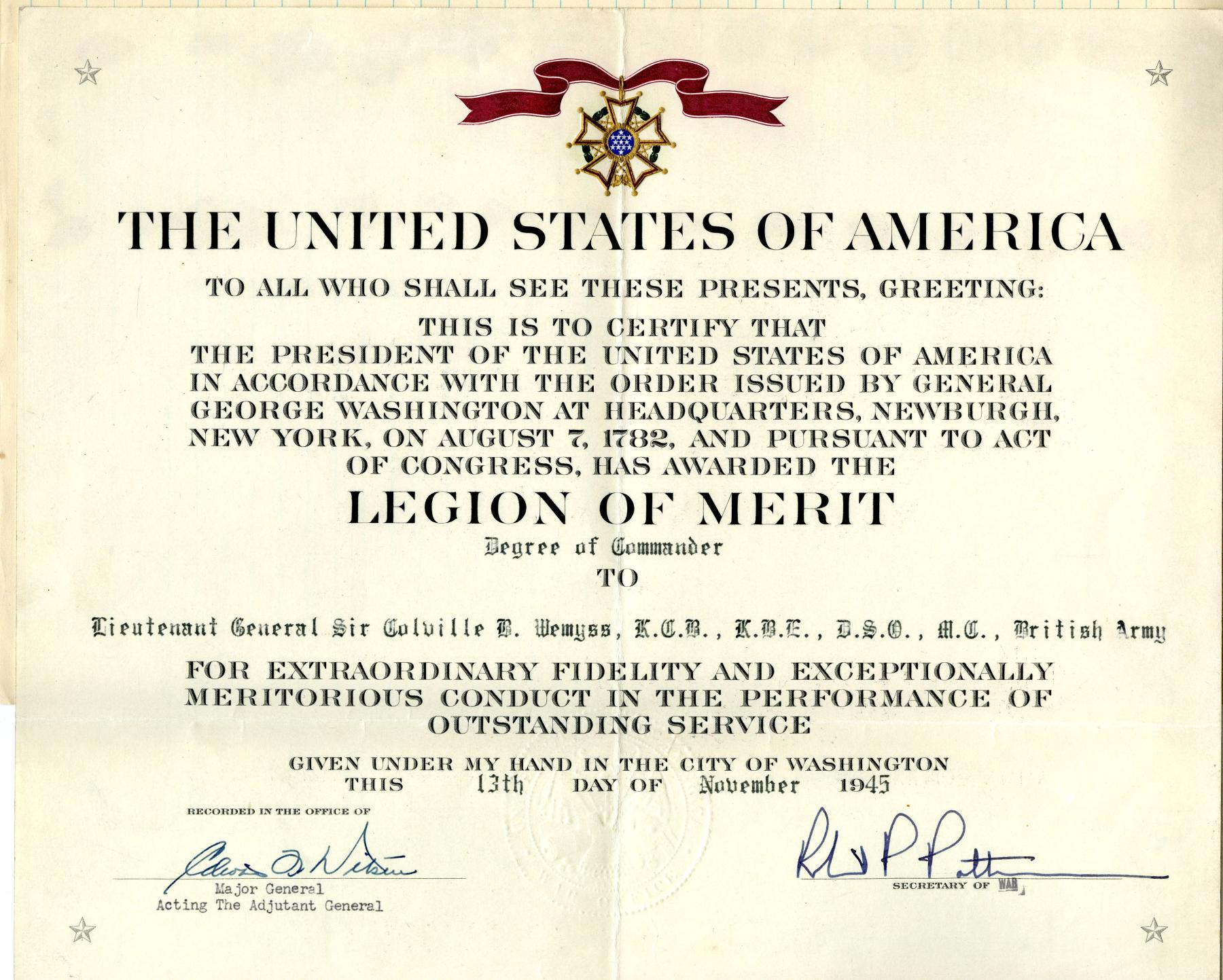
Besides raising a lot of money from the USA at a time when they were first not in the war and later reluctant to get involved, there were other specific wins by Wemyss which aided the British war effort: notably securing a mobile field hospital. Wemyss managed to obtain it against US opposition and ship it to UK in 1942. For his time in the USA he was awarded at the end of the war by the US President The Legion of Merit.