By Archie
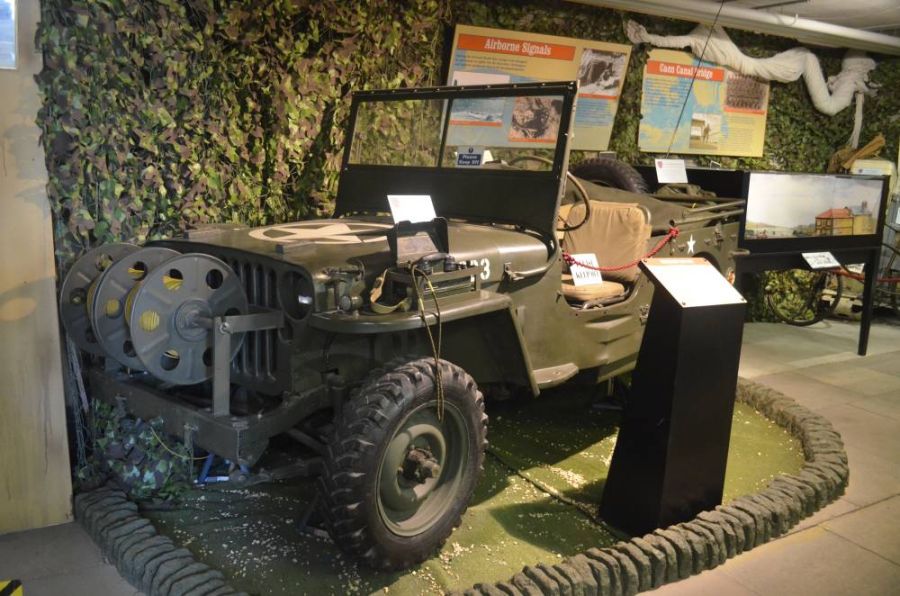
I’ve worked in the Royal Signals Museum for the past week as a part of my Year 12 work experience. I’m doing my placement at the Royal Signals Museum due to having a keen interest in military history but also in order to learn more about a specific part to military history. I have taken a key interest in the Willy’s jeep exhibited in the museum due to its mass production, longevity and versatility in combat between 1940-60.
Willy’s Overland began creating prototypes for a fast reconnaissance vehicle in 1940 for the US Army, Willy’s were joined in the competition to create a design by Ford and Bantam with Bantam creating the most successful design. However, despite this the American Army didn’t regard Bantam as having the production capability to produce enough jeeps that the Army wanted, so the designs were handed over to both Willy’s and Ford. Willy’s eventually created the Quad which would be developed into the Willy’s MB with elements from prototypes by all 3 producers being used in final designs and improvements.
The Willy’s jeep was given to practically all of the Allied forces in the Second World War including Britain and much of the Commonwealth with as many as 185,000 Willy’s Jeep’s being sent to allied nations through Lend Lease during the course of the war. By the end of the war the British Army had roughly 40,000 jeeps which had been utilised by the Signals and the British Army for effective reconnaissance. During Operation Market Garden, the British stripped various Willy’s down to minimum weight in order to fit them into Horsa gliders. British Willy’s were equipped with Wireless radios no. 19 and no. 22 over the American radios like the SCR-510 and SCR-610.
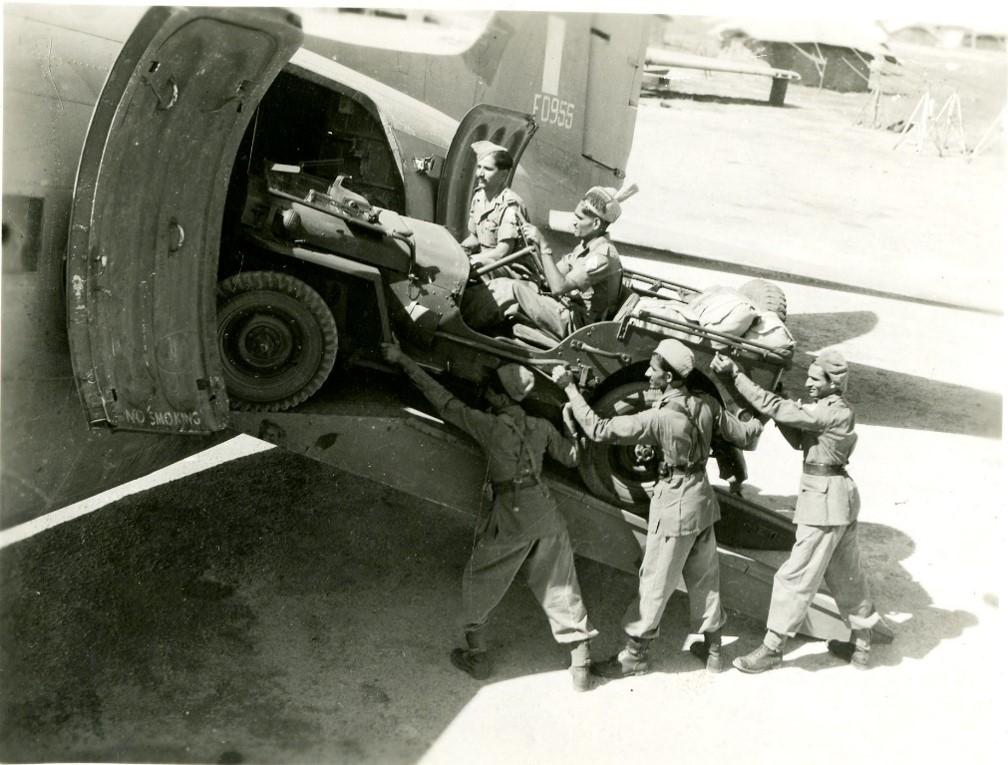
Image: A Willy's Jeep being loaded onto an aircraft
The Willy’s took part in several key operations over the duration of the war such as, Overlord (D-Day), Market Garden, Torch, Dragoon and many more on practically all theatres including amongst British units in Burma. The Willy’s continued to see service in the post war whilst nations began to replace and update the Willy’s MB it proved to provide much of the inspiration for light weight reconnaissance in the Cold War and beyond. With the Willy’s jeep itself eventually being phased out in the early 1960s by the National Guard whilst seeing service in Korea and updated versions used in Vietnam. Whilst the British Army stopped using Willy’s at roughly the same time replacing them with Land Rovers, however, similar designs continued to see service in French Army with the French Army only retiring the Hotchkiss M201(a jeep heavily inspired by the Willy’s) in the year 2000.
The Willy’s served in Armies across the world for a prolonged period during a time of significant technological advancement and proved to be reliable and efficient at the work it was given and was integral to the success of allied forces during the Second World War and proved invaluable to the British Army and the Royal Corps of Signals in providing effective communication from 1941 onwards.