The crew of Artemis II are now on their way back to Earth after a lunar fly-by mission. Their incredible experience brings to mind the Corps’ own links with space exploration.
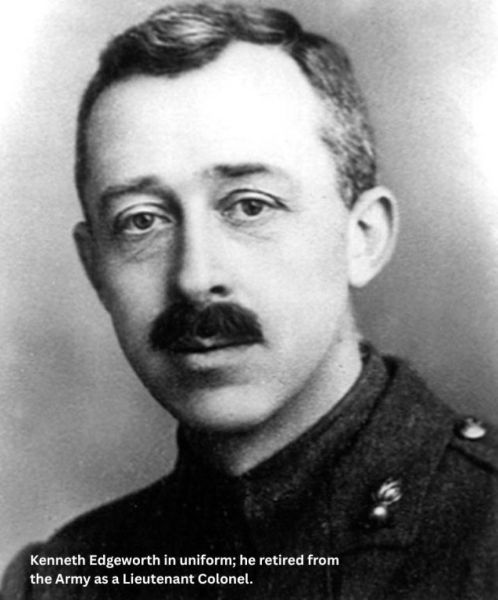
During the First World War Kenneth Edgeworth served as a Captain. He was responsible for the construction and maintenance of telegraph and telephone lines between GHQ, supply bases and HQs of the various Armies. Edgeworth was awarded the Distinguished Service Order, the Military Cross and was mentioned in Despatches on three occasions.
In 1920, he transferred to the Royal Corps of Signals and after retiring, published four books on Economics, making his mark as a theoretical astronomer. In 1943 he suggested that a reservoir of cometary material existed beyond Neptune and in 1992 its existence was confirmed. The region was named the Edgeworth-Kuiper Belt. Kenneth Edgeworth died in 1972 aged 92 - six years later a main belt asteroid was discovered and named in his honour: Asteroid 3487 Edgeworth.
On 1st January 2019, the American New Horizons spacecraft, after a journey of almost thirteen years, captured the first close up views of Ultima Thule, an Edgeworth-Kuiper Belt object, 4.1 billion miles from the Earth.