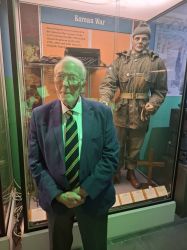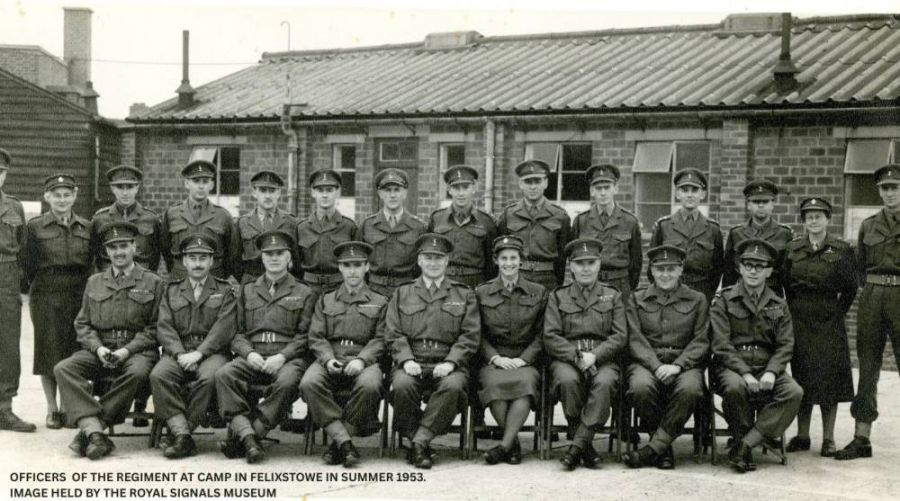
Earlier this month, the Museum received a donation of documents and photographs from the Special Communications TA Association via Mr David Smith. David, a retired Major, formed the Association in 2001. Amongst the documents is the Establishment of No 1 Special Communications Unit in 1947 and a booklet on the history of 'Special Communications in the Reserve Army 1947-1995’ edited by David.
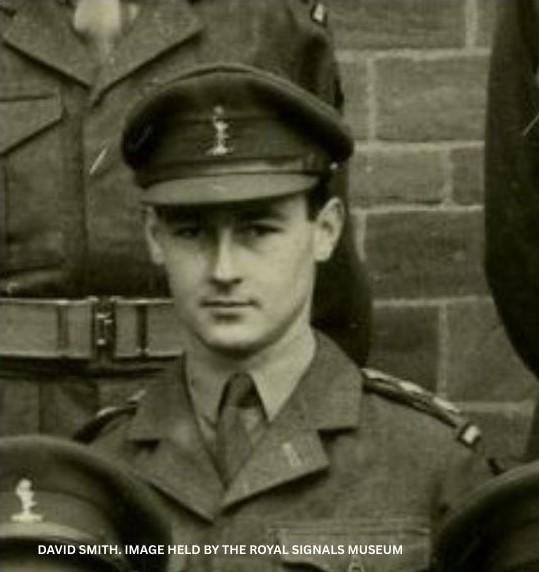
Back in 2024, David was interviewed about his time first as a National Serviceman and then with the Special Communications Territorial Regiment, which he remained with from 1952 until 1975. The extracts below are taken from the interview.
National Service was five and a half years. Most people nowadays think it was two years, but you had to do three and a half in the reserve afterwards. So I thought, I'm going to be in London, I'd better find a Royal Signals TA Regiment in London. And I joined this TA Regiment, which then was something like 600 strong, mostly National Servicemen. I didn't realise until three or four months after I joined that I had unwittingly joined MI6's TA regiment. And it was all hush-hush. Every soldier that came into the Regiment had to be vetted, and that made recruiting quite difficult. In 1975 a book was written by Group Captain F Winterbottom called ‘The Ultra Secret’ which exposed the first secrets of Bletchley Park and that made it become clearer what the role of this TA Regiment was.
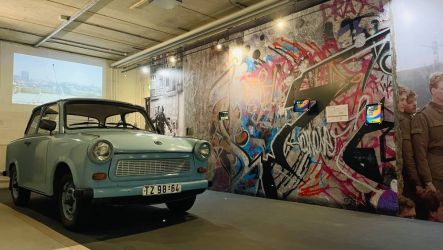
I was asked by MI6 people to join the service which I did three weeks after I was married and I started travelling. It was the height of the Cold War, 1958, and I started going to places like Prague and Moscow and Warsaw, as well as one or two more friendly places like Vienna and so on. I was doing all sorts of technical things. It was quite interesting for a young man, being followed around wherever you go with chaps in long leather coats and trilby hats, sort of thing. I used to spend a lot of my time as Head of Counter Eavesdropping, that meant every British government office, anywhere in the world - embassies, as well as diplomats’ homes and the UK.
After nine years I decided to return to industry but continued travelling all over the world in the radio communications field.
Both David’s complete interview the archival material shed a fascinating light on the history of the Special Communications Territorial Regiment during the Cold War and beyond.