Written by Jago Read (Year 10)
Royal Signals Museum Young Curator Programme (Work Experience)
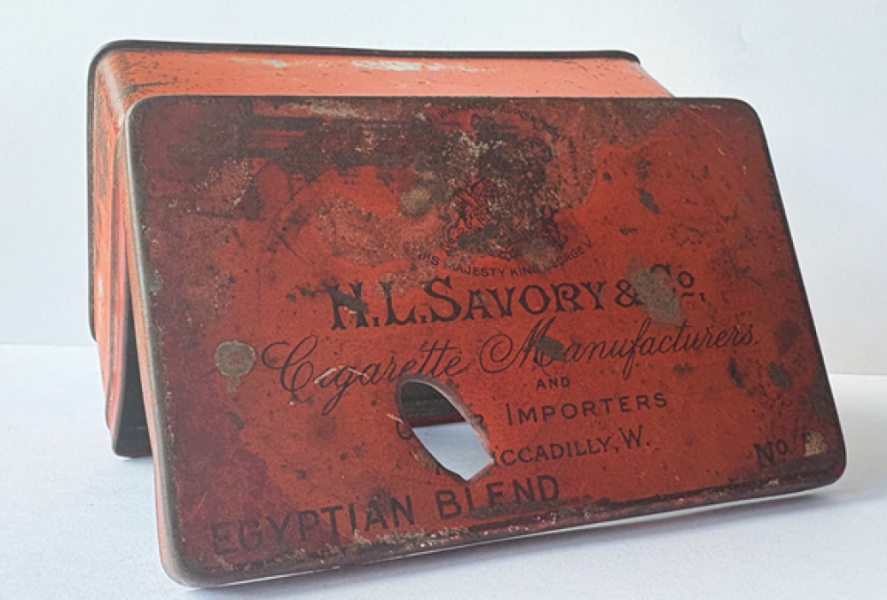
The story of this cigarette tin is unique: it saved a young signalman from serious injury when he used it as a paperweight. Moments later, a bullet ripped through the tent wall and pierced the tin - in other circumstances, it would have struck his hand. Through our limited research we have concluded that this scene more than likely happened during the First Battle of Ypres, in which a German frontal charge aimed to take the city to encircle Belgium in an operation many know as “the race to the sea.”
Whilst the British were using the Lee Enfield rifle - a weapon which British soldiers could use to fire more than 15 aimed rounds per minute - the robust German Gewehr 98 was tearing into their position. Our limited resources show that Albert Brasher was a Linesman, so most likely would not have engaged in the battle by this method. Instead, he would have worked on a cable wagon - the last fully-intact version of which is on display in the Royal Signals Museum.
The cable wagon was in concept a very simple idea: six to eight horses pull along a wagon laying a spool of wire while one or two outriders on horseback put it through a steel loop on a line pole to place the wire in a more hidden position or to move it out of the way of friendly troops. This method of line-laying made battlefield communications much more efficient and effective. Telephones were in use as early as 1914 but became more widespread and systematically reliable by 1916.
Overall, the cable wagon and this team were crucial in the Battle of Ypres, laying line to support communications between Headquarters and Ypres — communication without which the battle could have been lost, potentially allowing a full encirclement of the Belgian army and capital. Such a victory for the Germans during the first year of the war could have had significant strategic implications.
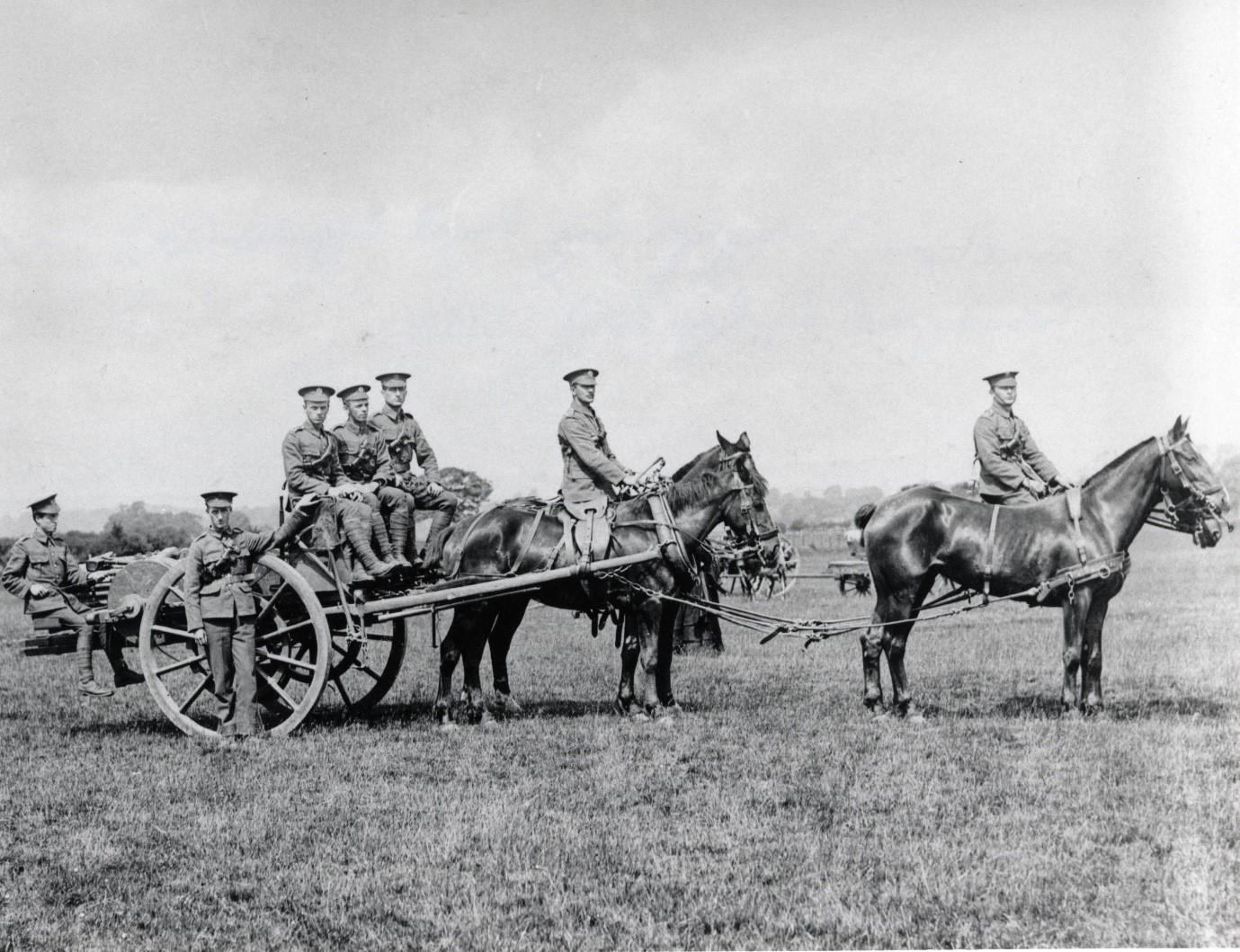
Figure 1: Stationary Cable Wagon
The most likely situation where this event could have happened would have been after the communications wire had been laid. It is possible — though entirely speculative and unconfirmed — that a friendly soldier’s weapon may have discharged and subsequently torn through the tent and into the cigarette tin which would have otherwise been his hand. While the Lee Enfield rifle was reliable and did not tend to misfire, it is entirely possible that human error could have occurred.
The cigarette tin itself is an intriguing story due to it being the main reason we are able to (approximately) pin down when this incident happened. The cigarette tin was a rare but occasionally used ration of the British Army, with it coming from a London tobacco seller. The other clue we received was the inside of the case which has an array of emblems from different kings and princes. It labels both King George V and (His Late Majesty) King Edward VII, which places us between the years of 1910 and 1915.
This suggests the tin was in use between the two dates of the First Battle of Ypres (1914) and the Second Battle of Ypres (1915). Through further research with limited information available, I believe this incident was most likely to have occurred during the First Battle. This conclusion stems from the fact that the Second Battle of Ypres was more about the use of chemical warfare rather than a frontal charge. The information sheet donated with the item in the 1980s mentions “machine guns firing at enemy aircraft” which implies a scouting run for an assault rather than a gas attack.
This investigation highlights how even small personal items can offer important insights into the lived experiences of soldiers during the First World War. With an analysis of the tin and through paperwork held at the Corps Archive, I was able to reach what I would call a reasonable conclusion to the events which happened that day with minimal errors or inconsistencies.
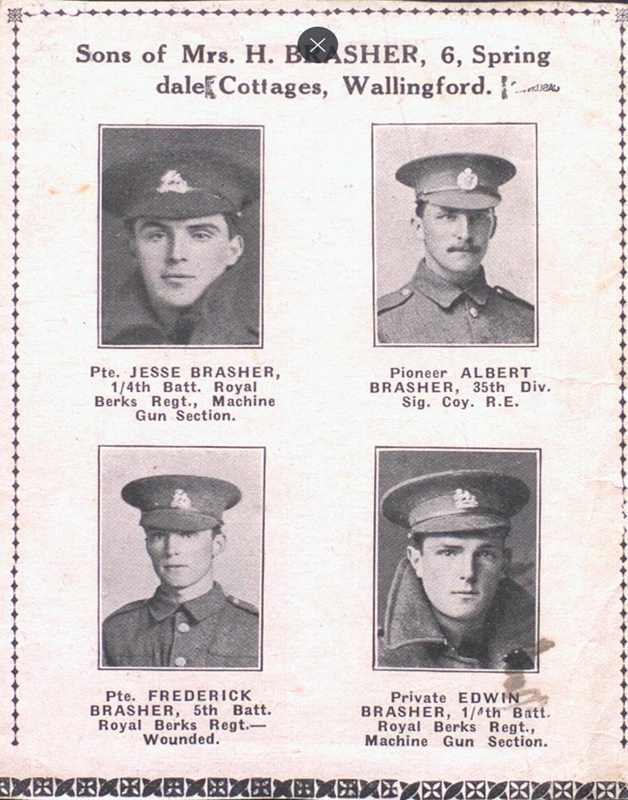
Figure 2: 35th Divisional Signals R.E - Brasher family